|
Jiaqing Xie I am a first-year PhD student in Computer Science at Fudan University. I received my M.Sc. in Computer Science from ETH Zurich and my B.Eng. in Electronics and Computer Science from the University of Edinburgh, and in Summer 2020 I worked with Manolis Kellis at MIT. I am supervised by Yuqiang Li, Tianfan Fu, Yuxin Wang, Xipeng Qiu, and Jun Xia. My research focuses on geometric transformers (KDD × 1), spectroscopic data mining (KDD × 3), vision-language models for scientific reasoning, and diffusion & flow matching.
Email: 26113050148 [at] m.fudan [dot] edu [dot] cn |

|




Representative Papers |
|
|
|
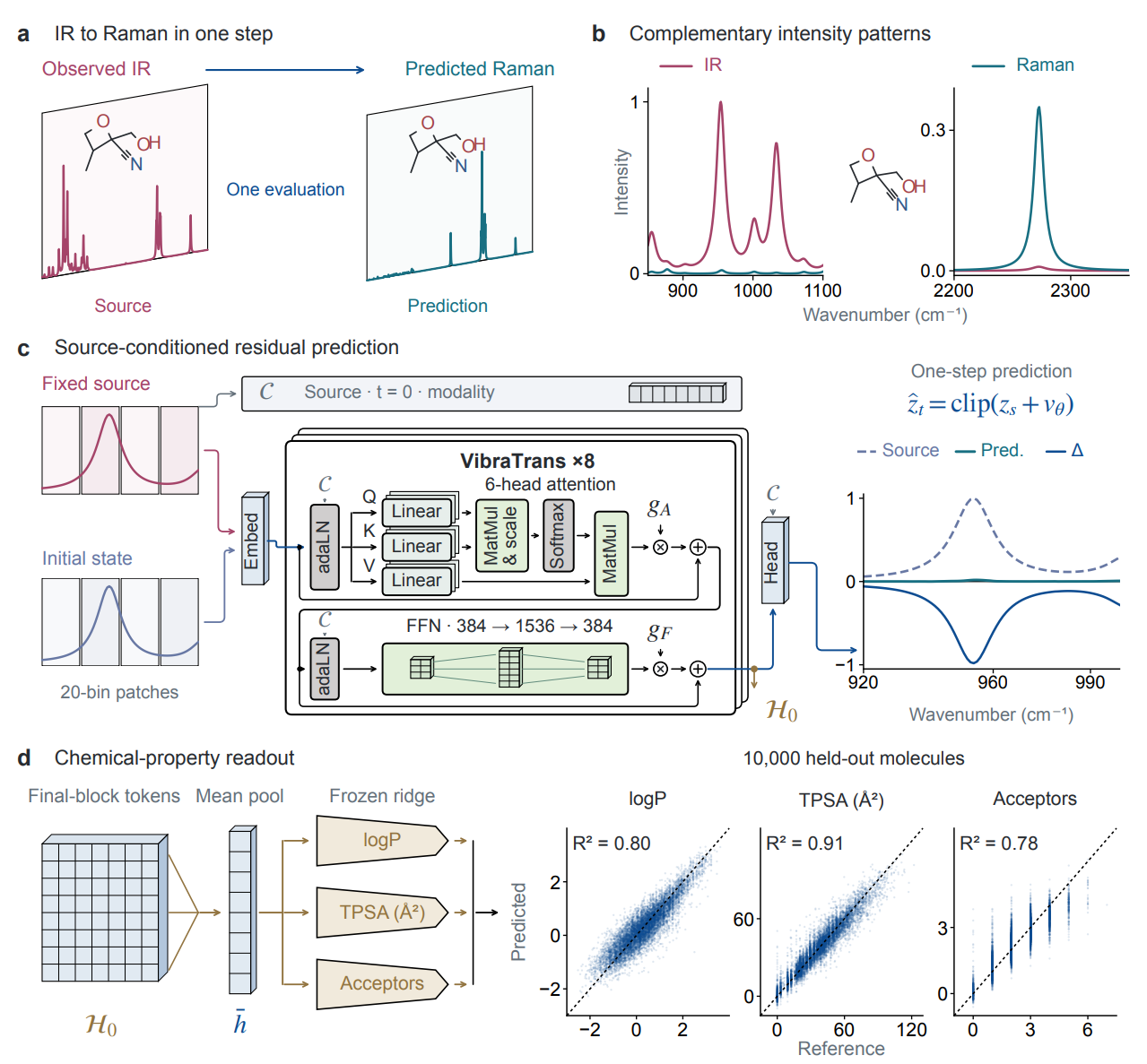
VibraTrans: Cross-modal Translation between Infrared and Raman Spectra with Molecular Representation Learning
Jiaqing Xie, Zhuo Yang, Ben Gao, Shuaike Shen, Tianfan Fu, Yuqiang Li Preprint, 2026 Code TL;DR: Infrared and Raman spectra probe the same molecular vibrations through complementary selection rules, so a single measurement can miss functional-group signatures. VibraTrans is a source-conditioned diffusion Transformer that predicts either vibrational spectrum from the other in a single network evaluation, using only the observed spectrum as input. Across QM9S, QMe14S and ViBench-Full it exceeds Transformer and convolutional baselines in all six dataset–direction comparisons (mean per-spectrum R² 0.714–0.949); predictions preserve modality-specific band strengths and reproduce the conjugation-induced carbonyl frequency shift in all 38 matched ketone pairs, verified by normal-mode assignments. Frozen encoder features raise QM9S IR-based logP and topological polar surface area prediction R² from 0.489 and 0.724 to 0.800 and 0.908, connecting cross-modal translation with structure-free molecular representation learning. |
|
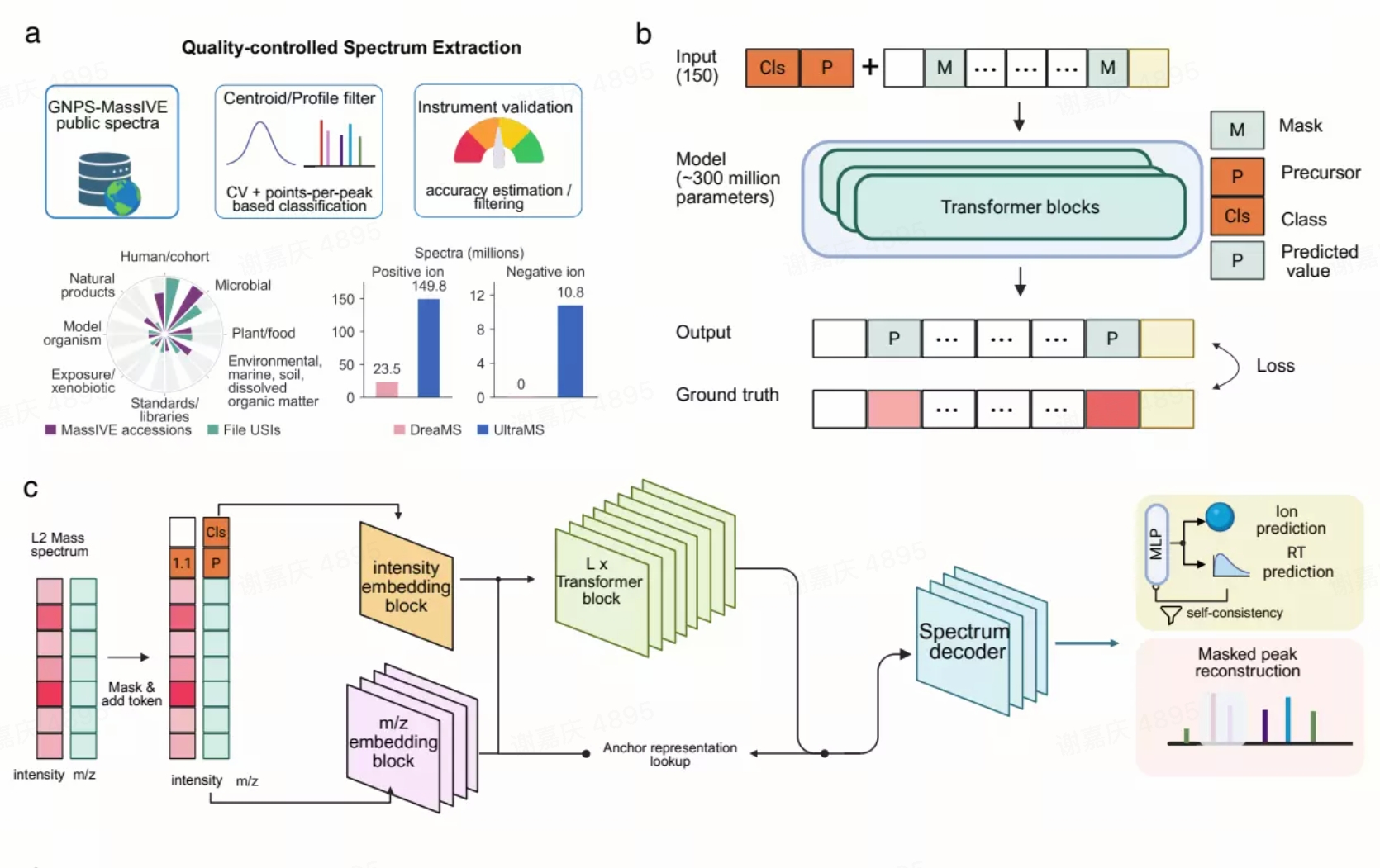
Deciphering Molecular Language for Spectral Interpretation with a Foundation Model Pretrained on Repository-Wide Metabolomics Data
Yifan Li, Yunhua Zhong, Pan Liu, Zikun Wang, Jiaqing Xie, Hongxin Xiang, Zihan Chen, Yuqiang Li, Jun Xia Preprint, 2026 Code TL;DR: Community repositories such as GNPS and MassIVE aggregate massive tandem-MS corpora whose chemical meaning remains largely untapped. UltraMS is the first dual-polarity foundation model, pretrained on more than 160 million positive- and negative-ion-mode spectra to decipher the molecular language latent in tandem mass spectra via self-supervised learning on unannotated data. It advances elemental detection, molecular identification with peak-by-peak substructural attributions via annotation transfer, molecular property profiling, and metabolic landscape characterization; on a clinical plaque cohort it discovers previously unrecognized phenotype-linked metabolites and corrects likely misannotated markers, while UltraAtlas organizes millions of experimental spectra into a unified coordinate system enabling millisecond-scale molecular profiling. |
|
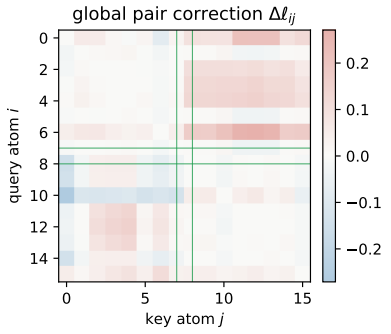
GSF-χ: Global Stereochemical Fields for Chiral Graph Transformers
Jiaqing Xie, Yuxin Wang†, Xipeng Qiu† arXiv preprint, 2026 arXiv / Code TL;DR: Enantiomers share atoms, bonds, and pairwise distances yet behave differently in chiral environments, so molecular encoders must respect rotations without going blind to reflection. GSF-χ lets every stereogenic unit modulate all pairwise attention through a reflection-even phase field, while a handedness pseudoscalar χ reverses a Chiral-RoPE on latent query–key blocks; a C2 projection keeps ECD peak counts and positions mirror-even and peak signs mirror-odd. GSF-χ leads every central-ECD output and improves axial Rotation and Symbol by 12.6% and 7.9% over the strongest baseline. |
|
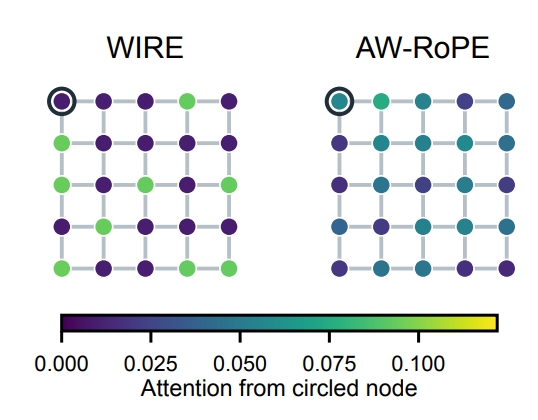
Analytic-Walk Rotary Positional Encodings for Graphs
Jiaqing Xie, Yuxin Wang, Xipeng Qiu arXiv preprint, 2026 arXiv / Code TL;DR: Rotary position encodings make attention sensitive to relative position, but prior graph versions assign each node a rotation from spectral coordinates, so the rotary factor between two nodes cannot distinguish the routes connecting them. AW-RoPE places the rotations on edges and sums the transported features over all walks, so contributions along different routes can reinforce or cancel: an exact variant evaluates the complete sum by a differentiable linear solve, and a sparse variant truncates it at finite depth. Across five synthetic tasks both variants reduce nRMSE by 15–58% relative to the strongest baseline, and on real superpixel, peptide and OGB benchmarks the sparse recurrence attains the best mean on every dataset with Performer kernels and on twelve of thirteen datasets with GIN. |
|
NMRTrans: Structure Elucidation from Experimental NMR Spectra via Set Transformers
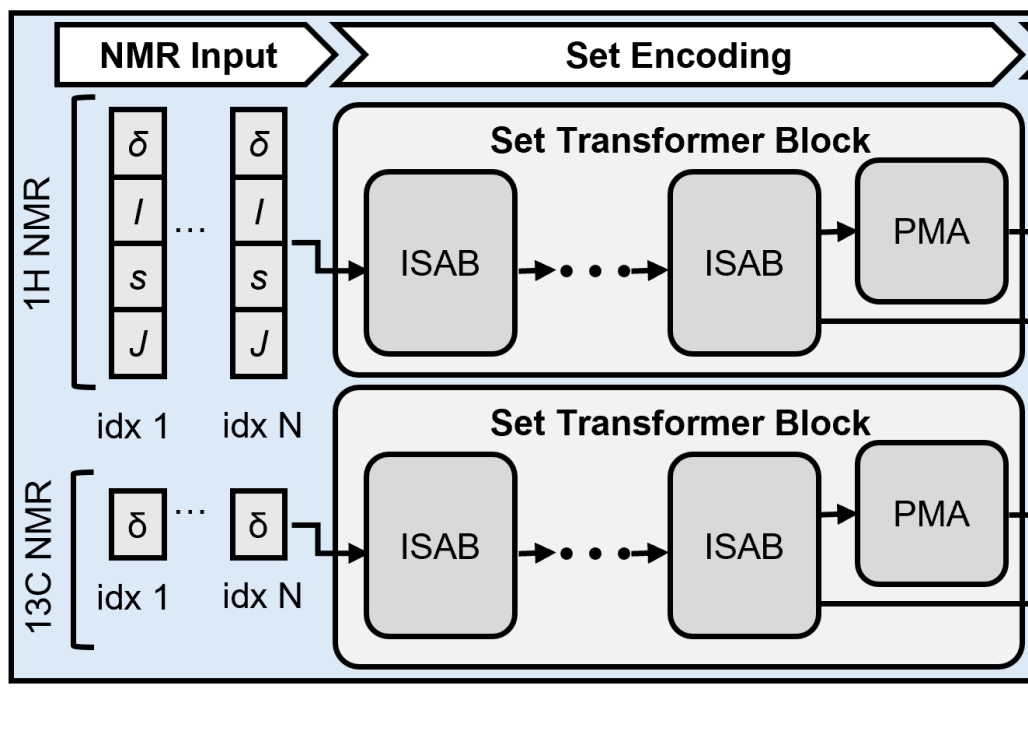
Liujia Yang†, Zhuo Yang†, Jiaqing Xie†, Yubin Wang†, Ben Gao, Tianfan Fu, Xingjian Wei, Jiaxing Sun, Jiang Wu, Conghui He, Yuqiang Li, Qinying Gu KDD, 2026 Paper / Code TL;DR: Recent NMR structure-elucidation models rely heavily on large corpora of computed spectra and drop sharply on experimental measurements. We build NMRSpec, a large-scale corpus of experimental 1H and 13C spectra mined from chemical literature, and propose NMRTrans, which models spectra as unordered peak sets and aligns the model's inductive bias with the physical nature of NMR. To our knowledge NMRTrans is the first NMR Transformer trained solely on large-scale experimental spectra, improving Top-10 Accuracy over the strongest baseline by +17.82 points (61.15% vs. 43.33%). |
|
R²-Seg: Training-Free OOD Medical Tumor Segmentation via Anatomical Reasoning and Statistical Rejection
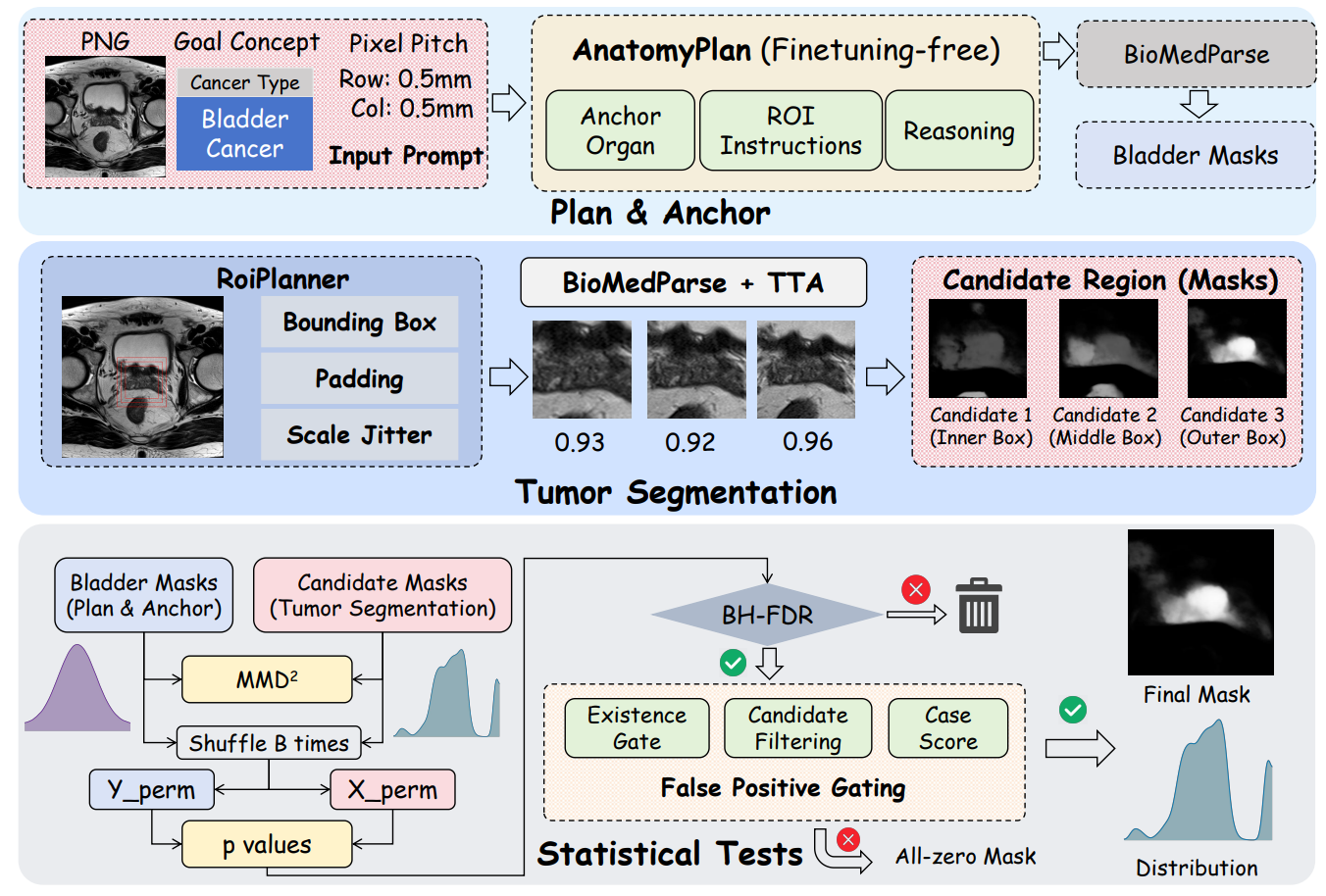
Shuaike Shen, Ke Liu, Jiaqing Xie, Shangde Gao, Chunhua Shen, Ge Liu, Mireia Crispin-Ortuzar, Shangqi Gao CVPR, 2026 (Oral) Paper / Code TL;DR: Foundation models for medical image segmentation struggle under out-of-distribution shifts, often producing fragmented false positives on OOD tumors. R²-Seg is a training-free Reason-and-Reject framework: an LLM-guided anatomical reasoning planner localizes organ anchors and generates multi-scale ROIs, then two-sample statistical testing rejects candidates from a frozen foundation model (BiomedParse) that are not significantly different from normal tissue. On multi-center, multi-modal tumor segmentation benchmarks, R²-Seg substantially improves Dice, specificity, and sensitivity over strong baselines with no parameter updates. |
|
MatVerse: A Foundation Model for Materials Science
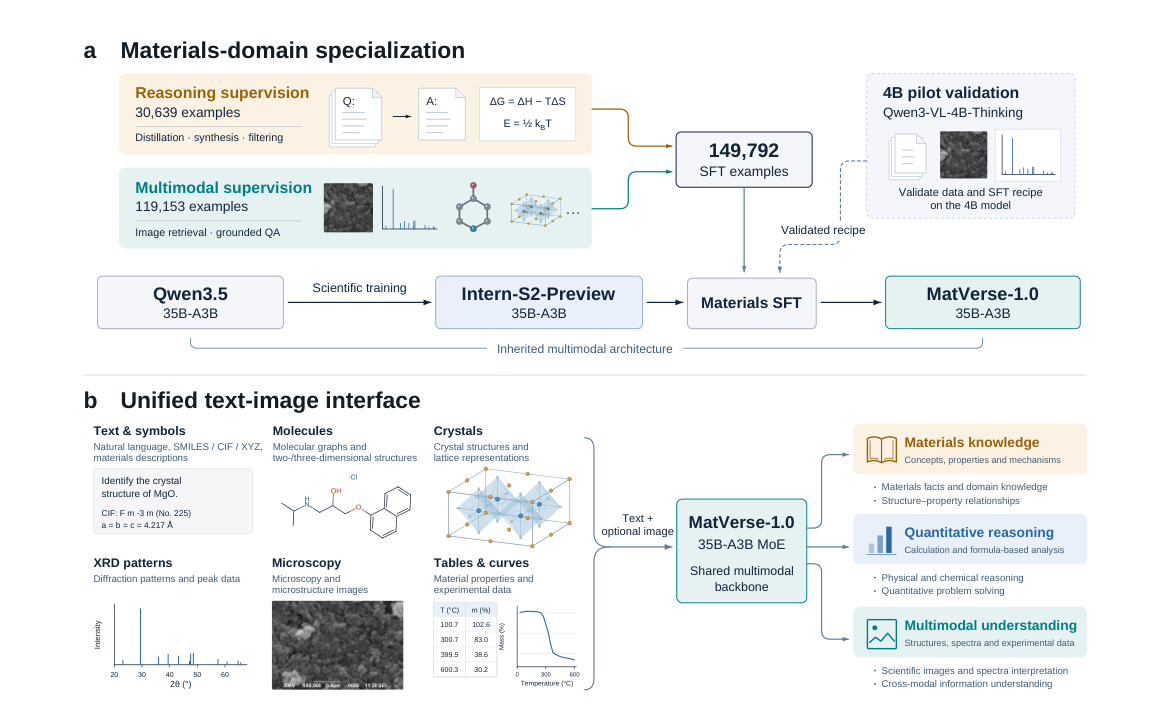
Xuanyu Zhu†, Qian Tan†, Bo Chen, Jiaqing Xie, Yang Han, Mei Wu, Xuanze Lin, Wanhao Liu, Yuchen Zhou, Shijie Wang, Biqing Qi, Shixiang Tang, Wenwei Zhang, Tianfan Fu, Kai Yu, Lu Chen, Yuqiang Li, Xin Chen Technical Report, 2026 TL;DR: MatVerse is a materials foundation model built upon Intern-S2-Preview (35B-A3B) and specialized through large-scale materials-domain post-training on ~150K multimodal examples covering materials knowledge, scientific reasoning, quantitative problem solving, structural understanding, and multimodal scientific interpretation, constructed with teacher-guided reasoning distillation, scientific problem synthesis, consistency-based filtering, and retrieval-based multimodal data construction. Across OmniMatBench, MatSciBench, and MaCBench, MatVerse consistently improves over its base model, outperforming GPT-5.2 on MatSciBench (63.59% vs. 59.6%) while also improving inference efficiency on calculation-intensive problems. |
|
Disagree to Accelerate: Closing the Loop on Diffusion Feature Forecasts
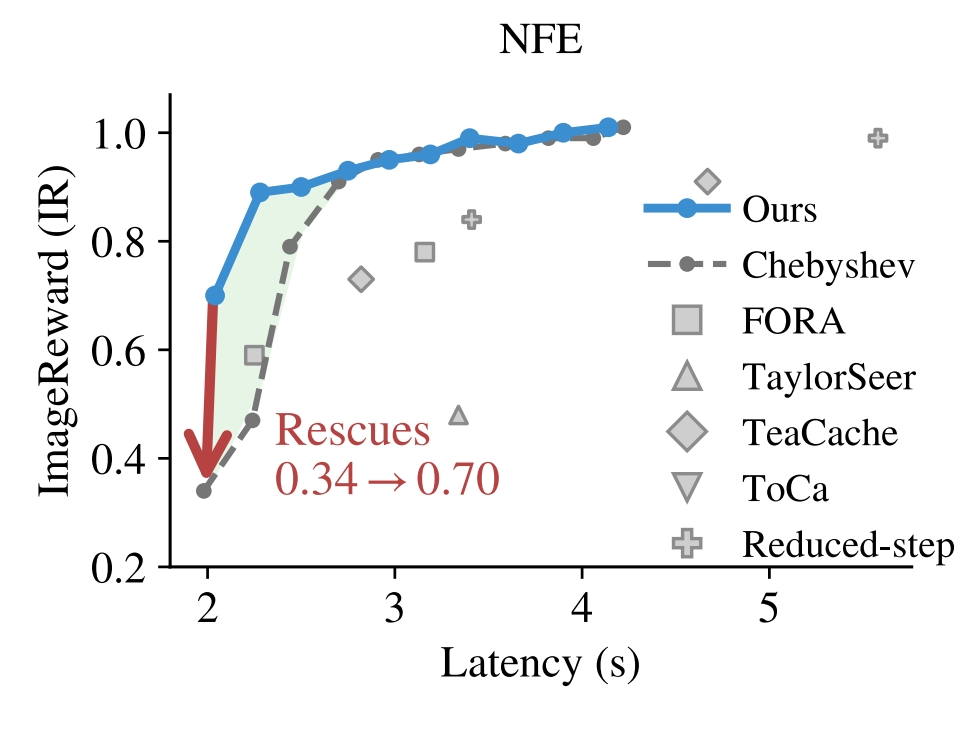
Yanchao Li, Jiaqing Xie, Ben Gao, Wanhao Liu, Yanbo Wang, T. Y. Tsui, Jinfei Liu, Yuqiang Li, Tianfan Fu arXiv preprint, 2026 arXiv / Code TL;DR: Training-free feature forecasting accelerates diffusion sampling by predicting features at skipped denoising steps, but open-loop caches trust the forecast in full at every skipped step. We show reliability can be observed from the cache itself: two forecasts agree where the feature trajectory is smooth and diverge where prediction turns hard, and their disagreement is a free runtime signal. RACER uses it as a training-free closed-loop controller that shrinks uncertain forecasts toward the last computed feature and, at the riskiest steps, refreshes the feature while repaying the cost by skipping a later one. At equal denoiser evaluations RACER improves the strongest open-loop baseline across SD3.5-Large, FLUX.1-dev, Wan2.1-14B, and HunyuanVideo on DrawBench, VBench, and COCO. |
|
Benchmarking Positional Encodings for GNNs and Graph Transformers
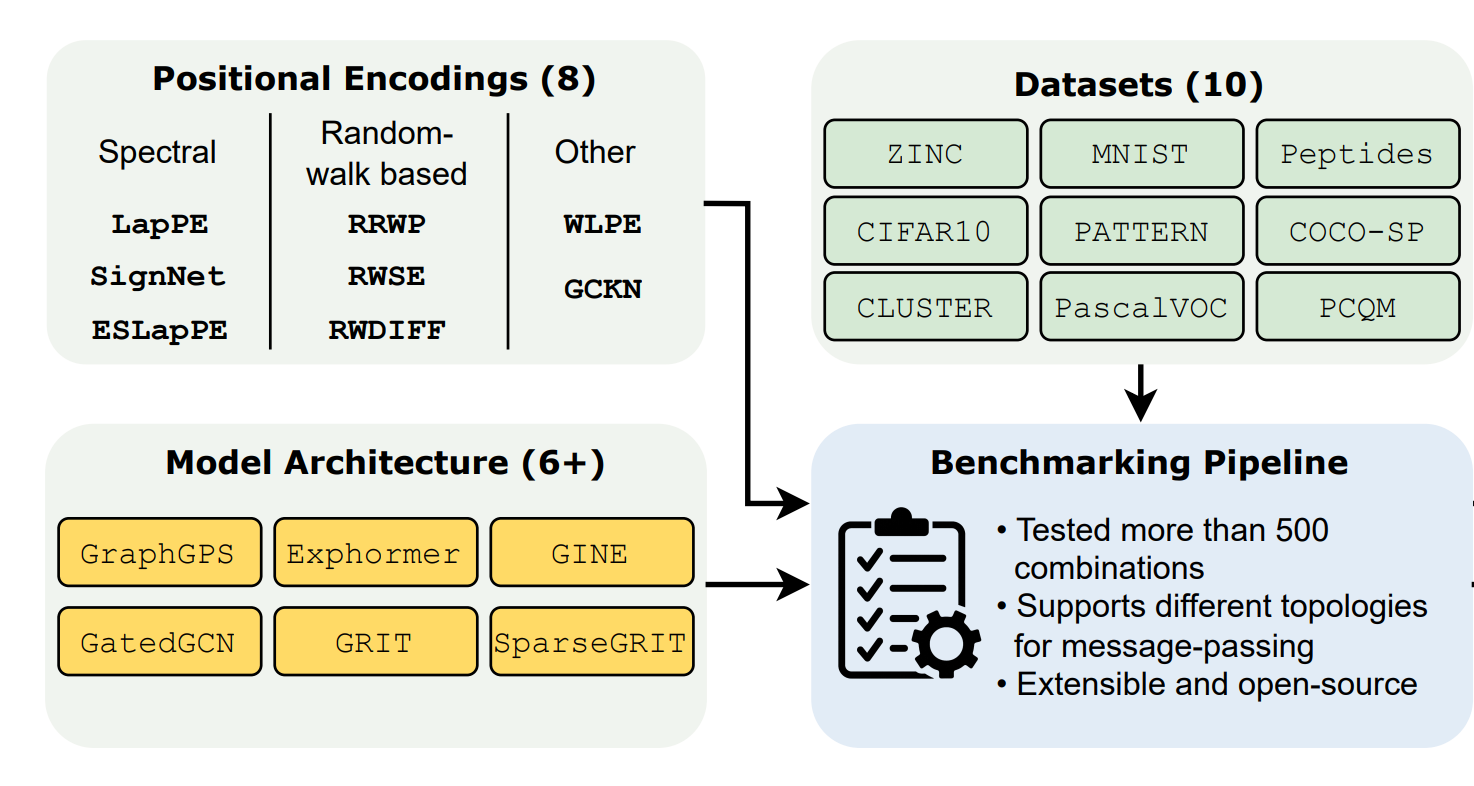
Florian Grötschla, Jiaqing Xie, Roger Wattenhofer KDD, 2026 (Datasets & Benchmarks) arXiv / Code TL;DR: Positional Encodings (PEs) are essential for injecting structural information into GNNs, particularly Graph Transformers, yet their empirical impact remains insufficiently understood. We introduce a unified benchmarking framework that decouples PEs from architectural choices, comparing 8 GNN and Transformer models, 9 PEs, and 10 synthetic and real-world datasets — over 500 model-PE-dataset configurations. Weisfeiler-Lehman distinguishability and other expressiveness proxies do not reliably predict downstream performance; highly expressive PEs can even degrade real-world tasks, while several simple, previously overlooked model-PE combinations match or outperform recent state-of-the-art methods. |
|
NMRGym: A Comprehensive Benchmark for Nuclear Magnetic Resonance Based Molecular Structure Elucidation
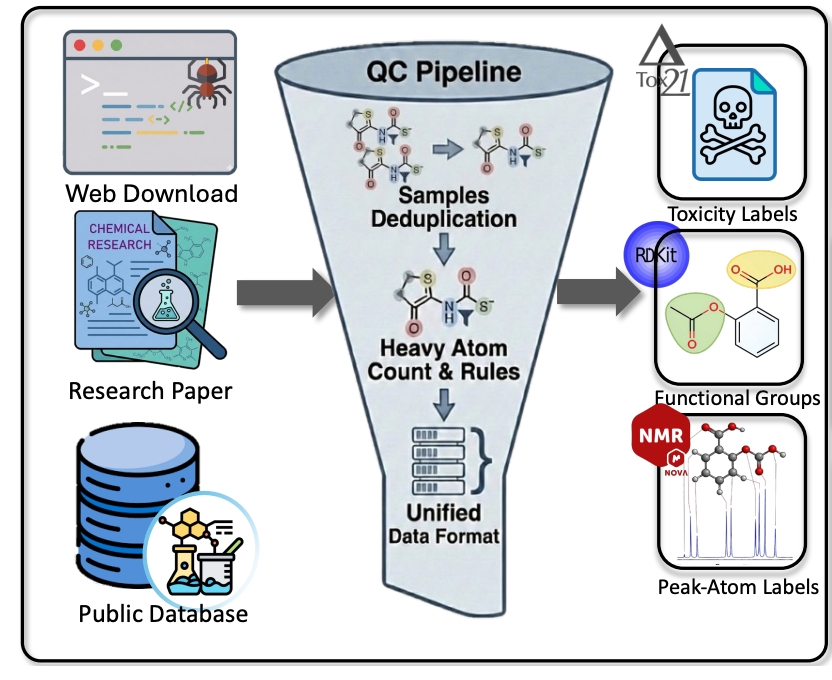
Zheng Fang, Chen Yang, Hai-tao Yu, Haoming Luo, Haitao He, Jiaqing Xie, Zhuo Yang, Jun Xia KDD, 2026 Paper / Code TL;DR: Deep learning for NMR structure elucidation is impeded by reliance on synthetic datasets, which introduces domain shifts on real-world experimental spectra, and by the lack of standardized evaluation protocols. NMRGym is the largest and most comprehensive standardized benchmark from high-quality experimental NMR data to date: 269,999 unique molecules paired with high-fidelity 1H and 13C spectra, strict quality control, a scaffold-based split to prevent data leakage, and fine-grained peak-atom annotations, with an evaluation suite covering structure elucidation, functional group prediction, toxicity prediction, and spectral simulation. |
|
SpectrumWorld: Artificial Intelligence Foundation for Spectroscopy
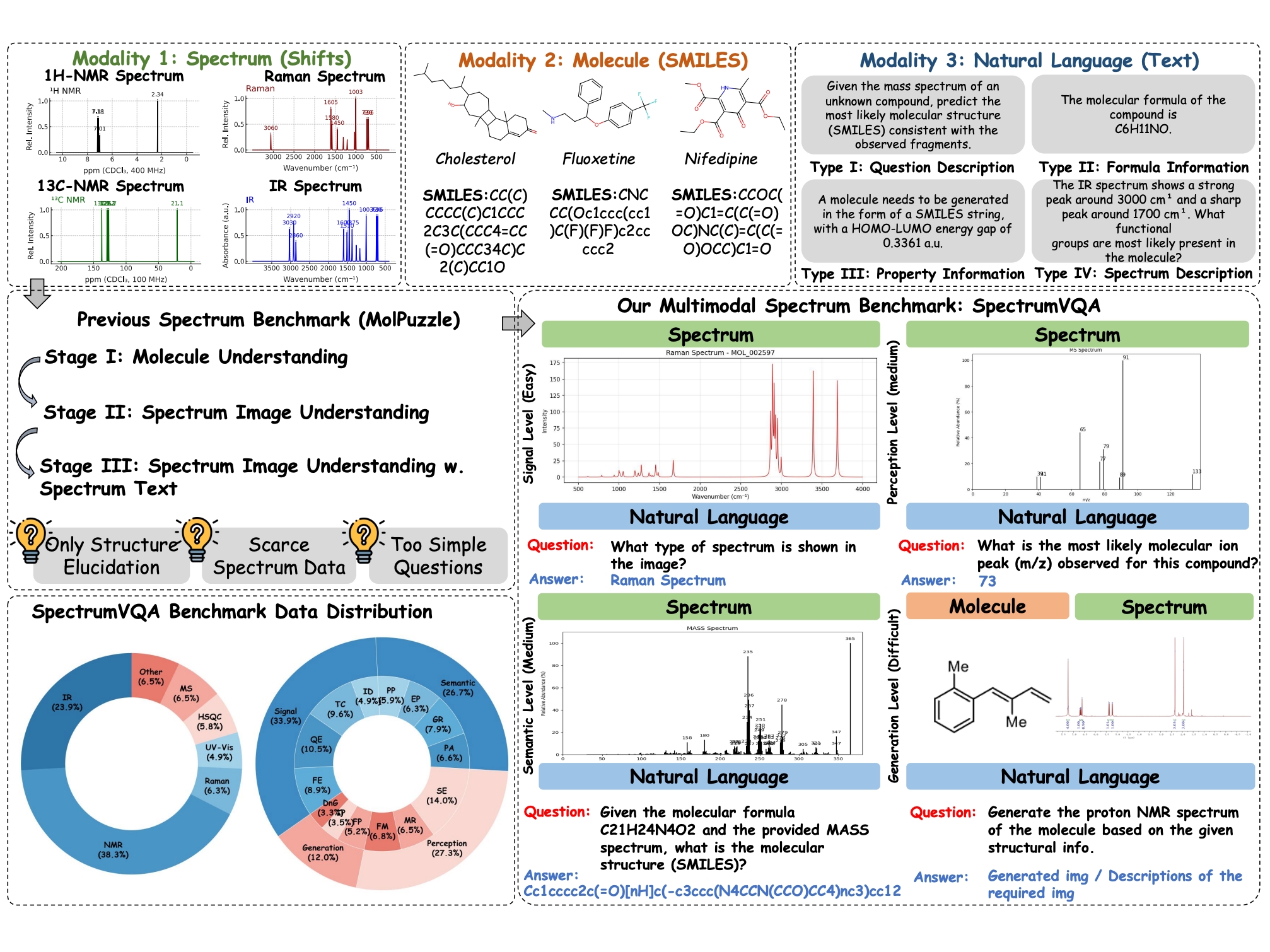
Zhuo Yang†, Jiaqing Xie†, Shuaike Shen, Daolang Wang, Yeyun Chen, Ben Gao, Shuzhou Sun, Biqing Qi, Dongzhan Zhou, Lei Bai, Linjiang Chen, Shufei Zhang, Qinying Gu, Jun Jiang, Tianfan Fu, Yuqiang Li KDD, 2026 Paper / Code TL;DR: Deep learning holds immense promise for spectroscopy, yet research and evaluation in this emerging field often lack standardized formulations. SpectrumLab is a unified platform that systematizes the field: a comprehensive Python library with data processing and evaluation tools and leaderboards, a SpectrumAnnotator module that generates high-quality benchmarks from limited seed data, and SpectrumBench, a multi-layered benchmark suite covering 14 spectroscopic tasks and over 10 spectrum types with spectra from over 1.2 million substances. Empirical studies with 18 cutting-edge multimodal LLMs reveal critical limitations of current approaches. |
|
QCBench: Evaluating Large Language Models on Domain-Specific Quantitative Chemistry
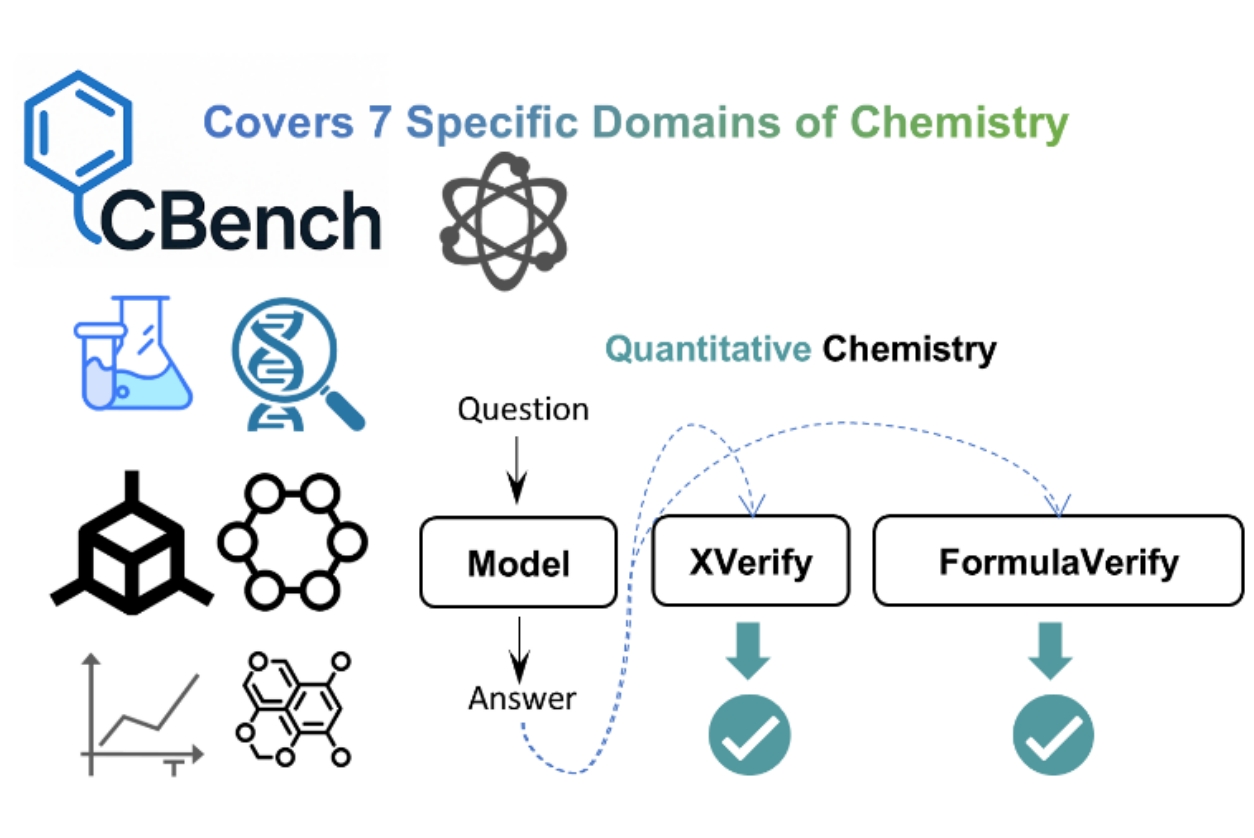
Jiaqing Xie, Weida Wang, Ben Gao, Zhuo Yang, Haiyuan Wan, Shufei Zhang, Tianfan Fu, Yuqiang Li Journal of Chemical Information and Modeling, 2025 DOI / Code TL;DR: QCBench is a benchmark of 350 calculation-oriented chemistry questions spanning eight subfields — analytical, inorganic, organic, physical, polymer, and technical chemistry, biochemistry, and materials science — designed to test the domain-specific quantitative reasoning of large language models. Answers are scored with high-precision numerical tolerance and an answer-verification model, enabling systematic comparison across LLMs and chemistry categories. |
|
DeepProtein: Deep Learning Library and Benchmark for Protein Sequence Learning
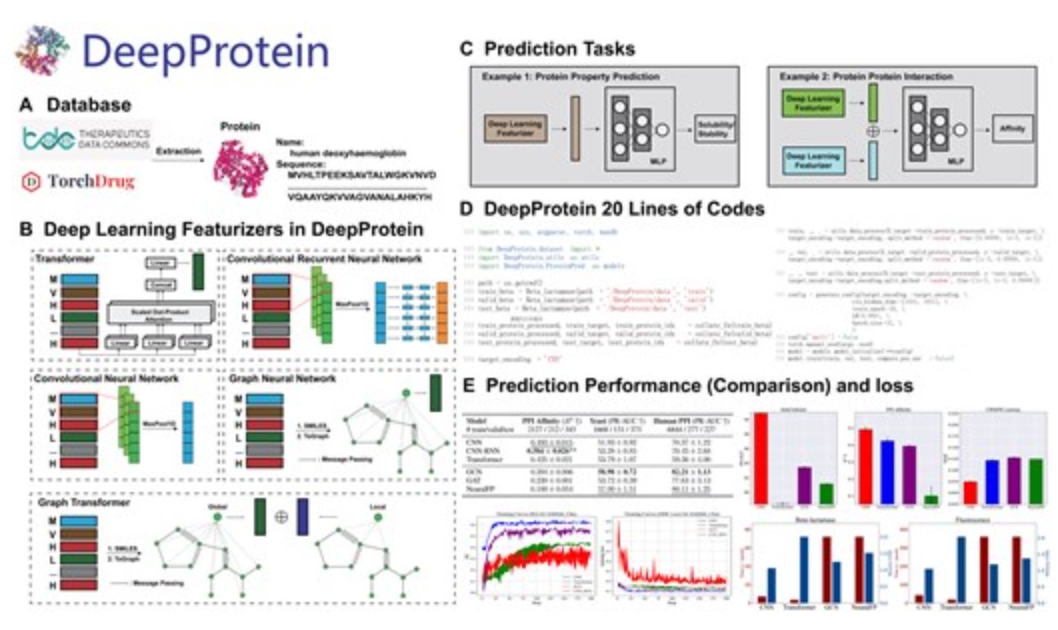
Jiaqing Xie, Tianfan Fu Bioinformatics, 2025 arXiv / Code TL;DR: A comprehensive and user-friendly deep learning library for protein-related tasks, with a benchmark evaluating CNNs, RNNs, transformers, and GNNs across protein function prediction, subcellular localization, protein-protein interaction, and structure prediction. We also introduce DeepProt-T5, a series of fine-tuned Prot-T5-based models that achieve state-of-the-art performance on four benchmark tasks while remaining competitive on six others. |
Software |
|
ChemClaw


A public skills package for chemistry-focused AI workflows — a chemistry-native AI agent skill library, installable with a single command ( npx skills add AI4Chem/ChemClaw).
GitHub |
News |
| 2026.11 | New preprints: VibraTrans (cross-modal translation between IR and Raman spectra) and UltraMS (dual-polarity tandem-MS foundation model). |
| 2026.10 | Our MatVerse technical report is released. MatVerse is a materials foundation model built on Intern-S2-Preview and specialized through large-scale materials-domain post-training. |
| 2026.09 | I joined Shanghai Artificial Intelligence Laboratory and Fudan University as a PhD student. |
| 2026.09 | Two new preprints on arXiv: GSF-χ and AW-RoPE. |
| 2026.08 | Four papers accepted at KDD: NMRTrans, NMRGym, SpectrumWorld, and Benchmarking Positional Encodings. |
| 2026.06 | Two papers accepted at CVPR: R²-Seg (Oral) and PolyReal. |
| 2026.05 | New preprint on arXiv: OmniMatBench, a human-calibrated multimodal reasoning benchmark across 19 materials-science subfields. |
| 2026.04 | New preprint on arXiv: PolyReal, a benchmark for real-world polymer science workflows. |
| 2026.02 | New preprint on arXiv: NMRTrans, structure elucidation from experimental NMR spectra via set transformers. |
| 2026.01 | DeepResearch Arena accepted at AAAI. New preprint on arXiv: NMRGym. |
| 2025.11 | QCBench was published in the Journal of Chemical Information and Modeling. |
| 2025.08 | New preprint on arXiv: SpectrumWorld, an artificial intelligence foundation for spectroscopy. |
| 2025.05 | DeepProtein was published in Bioinformatics. |
Academic Services |
|
Reviewer: 2026 ICLR, ACL ARR, JCIM – 2025 ACL, CVPR, EMNLP, ICONIP, NeurIPS, JCIM – 2024 ACML, NeurIPS |
Blog |
|
Oct 2026 – 从近似高消到图学习:Laplacian 理论、可迁移的定理与 Graph DeltaNet 的接口 — 20 页笔记的展开导读:Schur 补与星形–团消元的动图演示、谱稀疏采样、可微求解的梯度公式, 以及哪些定理能迁移到多前驱 DAG Graph DeltaNet、哪些桥不存在。附 完整 PDF。 Oct 2026 – Reading Notes: Approximate Gaussian Elimination (Rasmus Kyng, Yale PhD 2017) — Cholesky by random sampling, the first nearly-linear solver for directed Laplacians, faster random spanning trees, and what this line of work offers graph learning and theory. |
|
© 2026 Jiaqing Xie Design adapted from Ryan Bahlous-Boldi × Jon Barron |